
From the Rotary Club of Ada
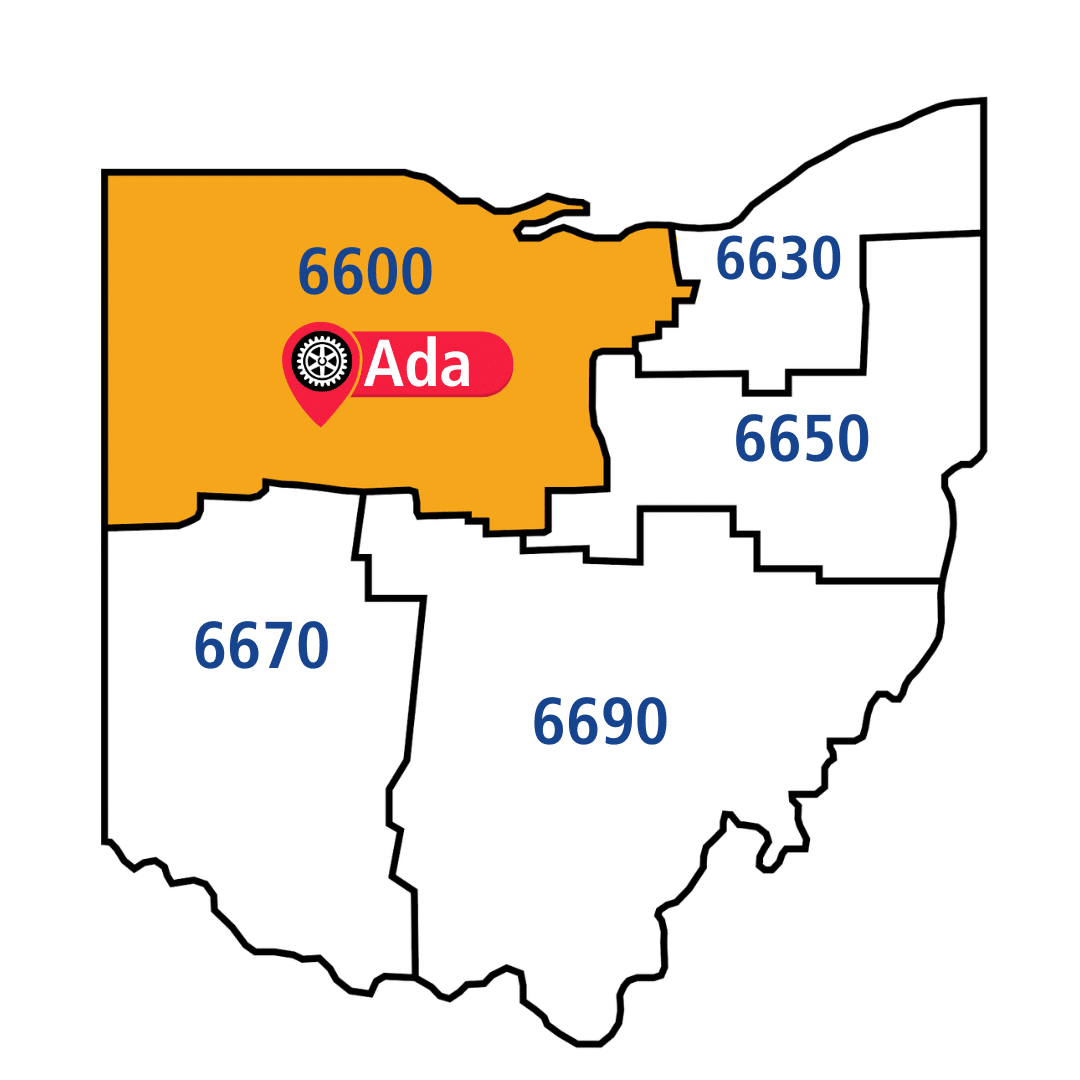
From Ada Ohio to the Marine Big Five
How Ada Rotarian Sarah Johnson landed on Shark Week — and met fellow Rotarians on the other side of the world
When Area 11 Assistant Governor Kevin Werst caught wind of what fellow Rotarian Sarah Johnson had been doing this spring, he knew it was bigger than one club meeting. “I know almost nothing about this, but Sarah does,” he wrote in an email introducing her to the district's public image team. Her work reached millions this summer: Sarah and the research team she joined in Gansbaai, South Africa, were involved in filming Discovery Channel’s Shark Week, as part of a National Geographic–sponsored mission to study and help preserve a great white shark population under threat from an unexpected predator — orcas.
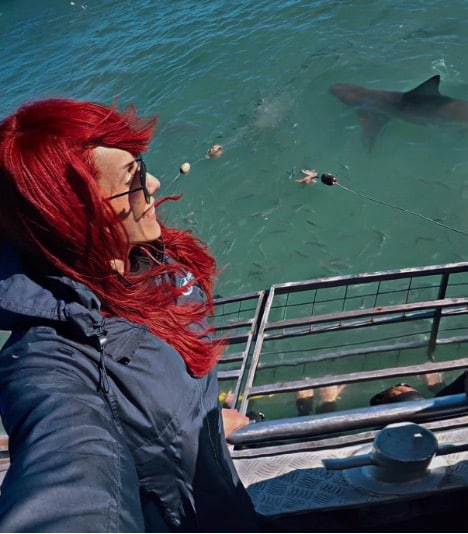
Sarah Johnson watches a great white shark surface off Gansbaai, South Africa, this spring.
A Rotary Connection, Half a World Away
While working in South Africa, Sarah did more than dive with sharks — she found fellow Rotarians. At a sunset market, she spotted a familiar Rotary wheel and, despite her nerves, introduced herself to members of the Rotary Club of Stanford.
“They were SO kind and welcoming, invited me to their next meeting, let me know about some struggles they faced asking for ideas, and let me know about their club activities and fundraising. All very similar to the issues we face back home in Ada.”
The South African club runs a secondhand shop, similar to a local Salvation Army, where donated household items and clothing are sold at low cost, along with a program that pairs Rotarians with community members who need small repairs done — fixing a bike chain, mending a torn seam, and similar tasks. For Sarah, the encounter was proof that Rotary’s spirit of service looks the same everywhere in the world.
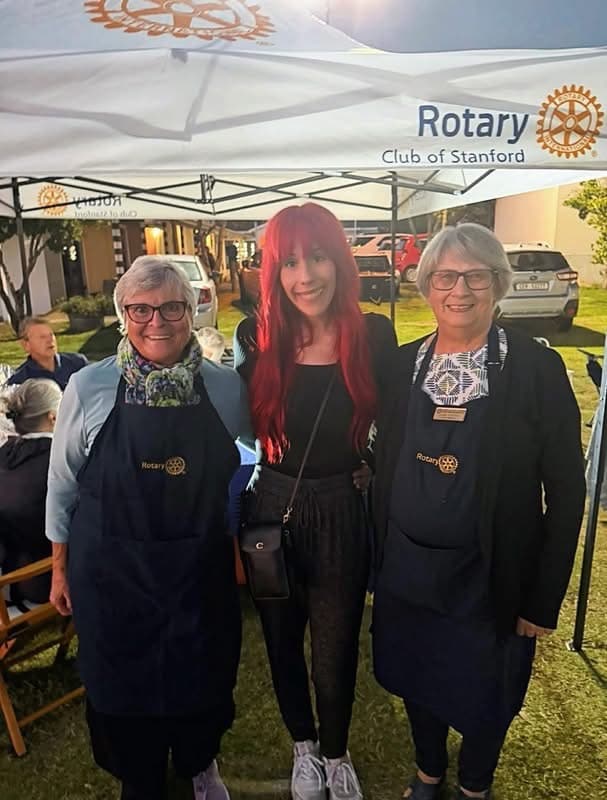
Sarah with members of the Rotary Club of Stanford, South Africa.
From a Childhood Dream to a Life of Conservation
Sarah’s path to South Africa didn’t start with sharks. It started in 2015, when she fulfilled a childhood dream of visiting Marineland in Canada — and left unsettled by what she saw. A conversation with protesters outside the park introduced her to the realities of animal captivity, and eventually, she began speaking at events to raise awareness.
That work took her around the world: as an ambassador at an elephant sanctuary in Thailand, and in sea turtle conservation in Costa Rica. A chance meeting with a National Geographic photographer opened the door to South Africa, where she spent eight months in 2017 studying the region’s “Marine Big Five” — dolphins, whales, the critically endangered African penguin, seals, and great white sharks.
This spring, Sarah returned to South Africa to help film footage for that Shark Week special: tagging, photographing, and documenting great white sharks up close, work designed to help the public fall in love with an animal many fear rather than understand. She also assisted with necropsies investigating a troubling pattern researchers are racing to understand — orcas killing great white sharks with what scientists describe as surgical precision, removing only the liver.
Inside the Research
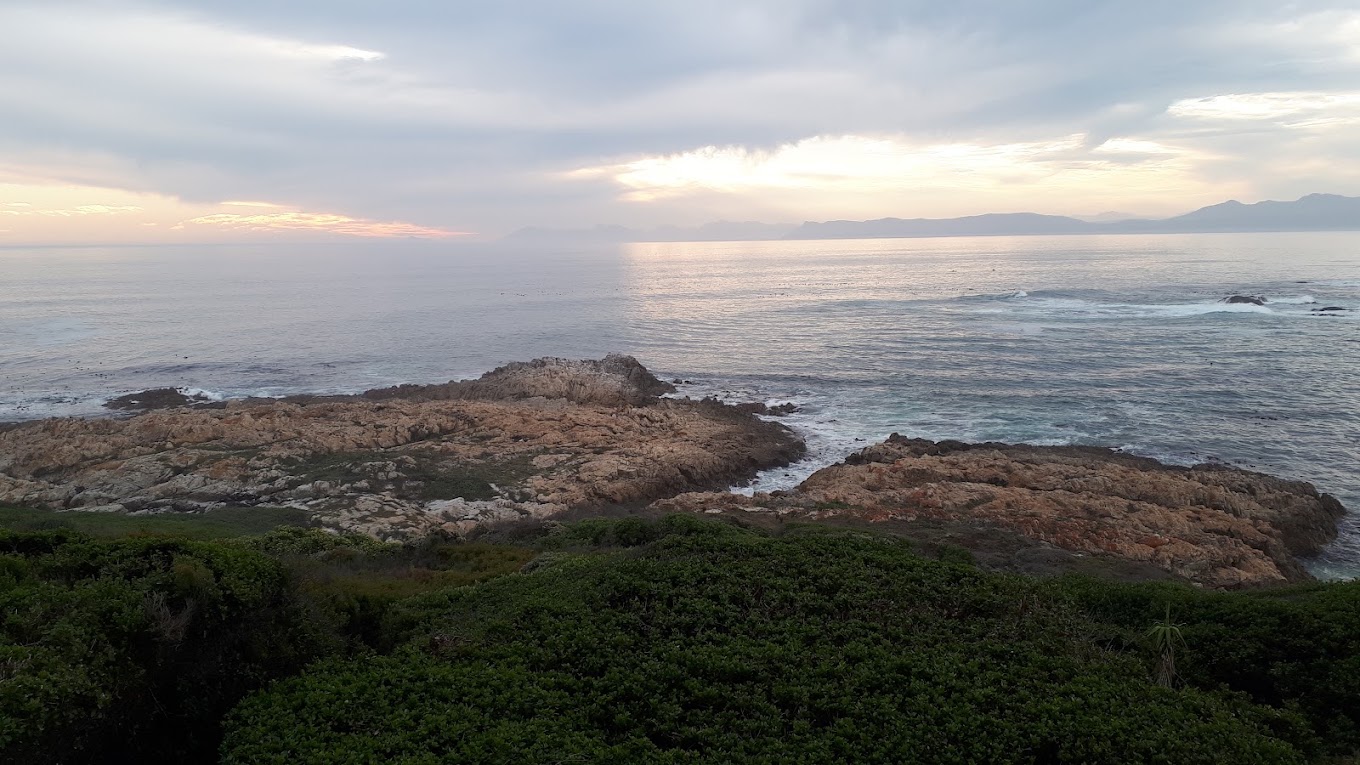
The coastline near Gansbaai, South Africa — often called the marine conservation capital of the world.
Sarah’s fieldwork centered on Gansbaai, a small town on South Africa’s Western Cape. Just offshore is Shark Alley, the narrow channel between Dyer Island and Geyser Rock, where a breeding colony of African penguins and roughly 60,000 Cape fur seals draw one of the densest populations of great white sharks on Earth — a natural laboratory for studying predator-prey behavior.
Over her time in the field, Sarah took part in 18 necropsies (17 great white sharks and one broadnose sevengill shark) — examinations that help researchers determine cause of death, disease presence, reproductive and genetic health, and feeding habits, information living animals can’t provide. She also trained in shark redirection, a controlled technique used to protect people in the water if a shark’s curiosity escalates into a potential threat.
The work is part of an ongoing partnership between Marine Dynamics and National Geographic. Shark Week reaches millions of viewers, and Sarah is quick to point out that the footage isn’t just for excitement.
“Without people caring about sharks, there is far less funding available for research, tagging programs, rescue efforts, rehabilitation facilities, and conservation education. Science gives us the answers, but storytelling gives people a reason to care.”
Bring Sarah to Your Club
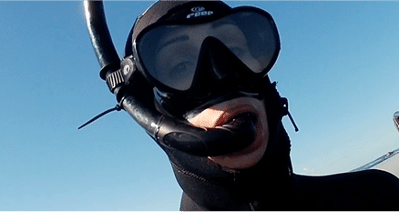
Preparing for a dive.
Sarah is offering to share her story — and her passion for conservation — as a speaker for any Rotary club in the district. Clubs interested in hosting her can reach out through through Area 11 Assistant Governor Kevin Werst at kevin.werst@gmail.com or the District 6600 newsletter team at d6600publicimage@gmail.com.
Sarah’s work aired as part of Shark Week’s 2026 lineup on Discovery Channel the week of July 26. More of her work will air in 2027.